Mosaic Cactus Design Review
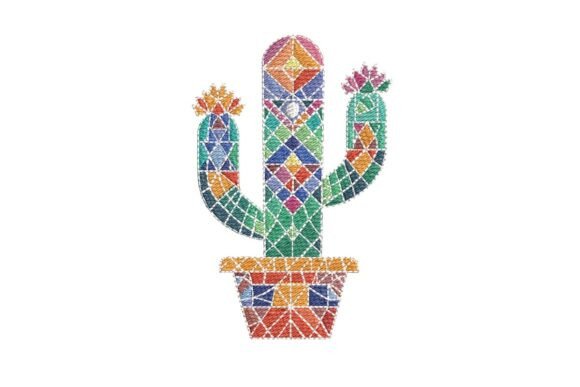
As a designer who has spent years digitizing patterns and testing them on everything from flimsy silk to heavy denim, I have learned that not every pretty image translates well into thread. When I first pulled up the Mosaic Cuctus file on my screen, my initial reaction was one of cautious optimism. The concept is undeniably striking: a saguaro cactus reimagined through a stained-glass lens, filled with vibrant, geometric patches. It sits comfortably within the Single Flowers Plants category, yet it feels more like a piece of modern art than a traditional botanical motif. But does it hold up under the needle? That is the question every serious crafter needs to ask before committing to a project.
First Impressions and Visual Impact
The immediate appeal of this design lies in its color blocking. Unlike standard embroidery motifs that rely heavily on shading or complex gradients, this piece uses distinct geometric shapes to create depth and interest. This approach is smart for machine execution because it minimizes the need for intricate blending, which can often look muddy if the thread tension is even slightly off. The "stained-glass" effect suggests a high-contrast aesthetic, meaning the final finished product will pop against neutral backgrounds. For an Etsy seller or boutique owner, this visual clarity is a major asset. It reads well in thumbnail images, which is crucial for online sales where customers scroll quickly through hundreds of listings.
However, the complexity of the geometric patches raises questions about stitch density. A design that looks like a mosaic on screen can sometimes become a stiff, cardboard-like patch on fabric if the digitizer has packed too many stitches into small areas. My advice is to approach this design with an understanding that it is likely a fill-heavy pattern. This makes it ideal for sturdy items but potentially problematic for delicate fabrics.
Real-World Application: The Tote Bag Test
To truly evaluate a machine embroidery design, you have to imagine it in a real-life scenario. I recently considered using a similar geometric botanical for a custom tote bag design for a local farmer’s market vendor. The Mosaic Cuctus would be a perfect fit for this application. Canvas tote bags provide the necessary stability to support the weight of the stitches without puckering. The vibrant thread colors would stand out beautifully against natural cotton or recycled canvas, creating a handmade product that feels both artisanal and modern.
Beyond tote bags, this design has strong potential for sweatshirt embroidery. Placed on the left chest or as a larger back piece, the geometric nature of the cactus complements the casual, structured feel of fleece or French terry cloth. It avoids the overly feminine tropes often found in floral designs, making it a versatile option for unisex custom apparel. For a craft business looking to expand its demographic, this is a significant advantage. It appeals to those who love nature but prefer a contemporary, graphic aesthetic over traditional realism.
Fabric Considerations and Technical Challenges
While the design is visually stunning, it demands respect regarding fabric choice. The geometric precision requires a stable base. If you attempt to stitch this on a stretchy jersey knit without proper stabilization, the geometric lines may warp, ruining the "stained-glass" illusion. Similarly, thin fabrics like chiffon or lightweight rayon are risky. The stitch density required to define those small geometric patches could cause the fabric to gather or tear.
For those interested in creating an embroidered patch, this design is an excellent candidate. Patches allow you to use a heavy cut-away stabilizer and stitch on twill or felt, ensuring that every angle of the mosaic remains crisp. Once stitched, the patch can be ironed or sewn onto hats, jackets, or backpacks. This adds versatility to your design assets, allowing you to offer add-on products to your customers.
Be cautious with curved surfaces like caps. While a cap front panel is stable, the curvature can distort wide designs. If the Mosaic Cuctus is wide, ensure your hoop size accommodates the full width without hitting the seam of the cap. If the design is tall and narrow, it may work better, but always run a test stitch on a scrap piece of the same material first.
Color Strategy and Thread Selection
The success of this design hinges entirely on your choice of thread colors. Because it mimics stained glass, contrast is key. Using analogous colors (colors next to each other on the color wheel) might result in a lack of definition, causing the geometric patches to blend into one another. Instead, opt for complementary colors or high-contrast pairings. For example, deep blues and bright oranges, or rich purples and yellows, will make the mosaic effect sing.
If you are selling this as a personalized gift or a holiday embroidery item, consider offering custom colorways. A pastel version could work beautifully for baby embroidery on a nursery blanket, provided the stitch count is not too high for the soft fabric. A monochromatic version using varying shades of green could offer a subtle, sophisticated look for home decor items like pillow covers or tea towels.
Commercial Viability and Best Practices
For commercial embroidery professionals, time is money. A design with many color changes and dense fills will take longer to stitch. Before listing this as a small shop product, calculate the stitch time. If it takes twenty minutes to stitch one unit, can you price your item to reflect that labor while remaining competitive? The visual value is high, which supports a higher price point, but efficiency matters.
Always verify the specifics of the digital embroidery file before purchase or use. Since the product description does not specify exact formats or license terms, you must check whether the file includes the formats compatible with your machine (such as PES, DST, or JEF). Furthermore, confirm the licensing rights. Can you sell finished items made with this design? Can you sell the digital file itself? Most designers allow the sale of finished physical goods but prohibit the redistribution of the digital file. Respecting these terms is essential for maintaining professionalism in the maker community.
Final Designer Notes
- Test on Scrap Fabric: Never stitch this design directly on your final garment. Use a scrap piece of the same fabric and stabilizer to check for puckering or thread breaks.
- Check Stitch Density: If the design feels too stiff after stitching, consider using a lighter weight stabilizer or adjusting your machine tension.
- Contrast is King: Ensure your thread colors contrast sufficiently to maintain the geometric definition of the mosaic pattern.
- Verify Hoop Size: Confirm the design dimensions fit within your available hoop sizes, especially for smaller items like baby clothes or caps.
- Review Licensing: Always read the license agreement included with the embroidery file to ensure compliance for commercial use.
In conclusion, the Mosaic Cuctus is a bold, contemporary addition to any designer’s library. It bridges the gap between traditional botanical themes and modern graphic design, offering a unique aesthetic for Single Flowers Plants enthusiasts. With careful attention to fabric selection, stabilization, and color theory, it can elevate a simple embroidery project into a standout piece of wearable art or home decor. For the discerning maker, it is a design worth mastering.