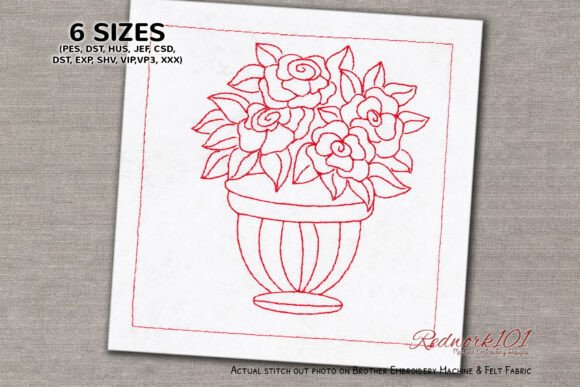
Pleasant Rose Flower Pot Redwork Review
As an embroidery designer who spends countless hours digitizing and testing patterns for seasonal collections, I know that the right design can make or break a holiday product line. When I first loaded the Pleasant Rose Flower Pot Redwork into my software, I was immediately struck by its timeless appeal. This is not just another floral motif; it is a carefully crafted piece of machine embroidery design history brought to life with modern precision. For those of us running small shops or Etsy stores, finding a design that balances nostalgia with commercial viability is rare. This redwork pattern, featuring a classic flower pot brimming with blooming roses, offers exactly that balance.
The Seasonal Mood and First Impressions
The immediate emotional tone of this design is cozy and nostalgic. Redwork, with its single-color stitching on neutral backgrounds, evokes a sense of heritage and warmth that is perfect for the holiday season. It feels less like a trendy flash-in-the-pan and more like a heirloom in the making. The decorative style is clean yet detailed enough to hold interest. The roses are distinct, and the pot provides a sturdy base that grounds the composition. For holiday embroidery projects, this aesthetic works beautifully because it transcends specific holidays. While it fits perfectly into Christmas decor due to the traditional red-on-white palette, it is equally suitable for Valentine’s Day, Mother’s Day, or spring refreshes.
What stands out most is the versatility offered by the six available sizes. In the world of Bouquets Bunches and floral Embroidery, having size options is critical. It allows me to plan a cohesive collection where the same motif appears on a large pillow cover and a tiny ornament, creating a unified brand look without monotony. The detail level is appropriate for redwork; it avoids overly dense satin stitches that can puckers fabric, relying instead on clean running stitches and subtle fills that highlight the shape of the blooms.
Real-World Applications for Holiday Selling
When building a seasonal shop collection, I always ask: "Where does this design live?" For the Pleasant Rose Flower Pot Redwork, the answer is everywhere. Here is how I envision using this digital embroidery file across various product categories to maximize sales during the gift-giving season.
- Kitchen Towels and Table Linens: This is the most natural home for redwork. A set of flour sack towels featuring this design makes for an incredible handmade gift. The simplicity of the stitch work complements the texture of linen and cotton beautifully.
- Sweatshirt Embroidery: Placing a medium-sized version on the left chest of a cream or oatmeal-colored sweatshirt creates a premium, boutique feel. It appeals to customers looking for understated elegance rather than loud graphics.
- Tote Bag Design: Canvas totes are huge sellers. The sturdy nature of canvas handles the stitch density well, and the classic rose motif appeals to a wide demographic, from students to grandmothers.
- Ornaments and Patches: Using the smallest size for hoop ornaments or embroidered patches allows for low-cost add-on items at craft fairs. These are perfect impulse buys for shoppers looking to complete their gift bundles.
- Pillow Covers: A large-scale version centered on a square pillow cover becomes a statement piece for living room decor, adding a touch of rustic charm to holiday interiors.
For Etsy seller accounts and small business owners, this design supports the creation of "matching sets." Imagine a bundle including a tote, a towel, and a patch. This increases the average order value and enhances the perceived value of your small shop product offerings. Furthermore, the visual recognition of a consistent motif across different items helps build brand consistency, which is crucial for customer trust and repeat business.
Navigating Technical Challenges and Fabric Choices
While the design is robust, there are areas where caution is necessary. As a designer, I have learned that redwork can be deceptive. Because it often uses fewer stitches than filled designs, the choice of fabric and stabilizer is paramount. Here are my practical notes for ensuring high-quality finished products.
First, consider the stitch density. Redwork relies on the visibility of individual stitches. On thick towels or heavy denim, you must ensure your needle is sharp enough to penetrate without causing excessive holes. Conversely, on stretchy garments like jersey knit sweatshirts, proper stabilization is non-negotiable. I recommend using a cut-away stabilizer for apparel to prevent distortion after washing, whereas a tear-away might suffice for stable woven fabrics like linen.
Thread color selection is another critical factor. While traditional red is iconic, do not be afraid to experiment. Deep burgundy or even forest green can shift the mood from festive to earthy. However, always test your thread colors on both light and dark fabrics. On dark fabric, redwork may lose its definition unless you use a contrasting thread or a backing that highlights the stitch path. Also, avoid using metallic thread for this specific design unless you are experienced; metallic threads can break easily in the continuous runs typical of redwork, leading to frustration and wasted time.
Be mindful of the hoop size relative to the design. If you are using the largest size, ensure your hoop can accommodate it without hitting the edges, especially if you are adding personalization. Speaking of personalization, while this design is beautiful on its own, adding tiny lettering near the pot requires careful placement. Ensure there is enough negative space so the text does not crowd the roses. Always review small details after stitching a test sample to confirm that the curves of the petals remain smooth and do not become jagged.
Enhancing Seasonal Appeal and Buyer Emotion
The true power of the Pleasant Rose Flower Pot Redwork lies in its ability to evoke emotion. During the holiday shopping period, buyers are not just purchasing an item; they are buying a feeling. This design screams "home," "tradition," and "care." When you present this as a personalized gift option, perhaps by monogramming the pot or adding a date, you elevate the product from a commodity to a keepsake.
To leverage this in your marketing, create realistic mockups. Use a printable mockup service or stage your own photos with natural light, dried flowers, and warm textiles. Show the design in context—on a table set for holiday dinner, or draped over a cozy armchair. These visuals help customers imagine the product in their own lives, increasing engagement and conversion rates. For social media previews, short videos showing the embroidery machine stitching the design can be mesmerizing and drive significant traffic to your listings.
Finally, always confirm commercial licensing before selling finished seasonal products. Since this is a commercial embroidery asset, understanding the terms ensures you protect your business. Check the provider’s guidelines regarding the number of finished items you can sell and whether attribution is required. By respecting these terms and focusing on quality execution, you can build a reputable brand around high-quality holiday embroidery products.
In conclusion, the Pleasant Rose Flower Pot Redwork is a versatile, emotionally resonant addition to any seasonal collection. Its classic style, combined with the flexibility of six sizes, makes it a reliable choice for everything from kitchen linens to apparel. By paying attention to fabric texture, stabilizer choice, and thoughtful presentation, you can transform this digital file into a best-selling physical product that delights customers year after year.